
Code is not the starting point. It’s the finish line.
If you just focus on code generation with AI, you miss out on 90% of the value.
Real agentic engineering runs through the entire process - from the first conversation about a feature, through planning, modeling, specification, and proof of concept. Only at the very end do we talk about generating code. And by that point, the agent has something solid to work with.
Here are the five use cases that deliver real value - there are many more.
1. Review the Model
Point an agent at your existing event model and it goes to work - adding comments on individual nodes, flagging incomplete slices or features, and surfacing critical information you missed. It asks “what about this?” on edge cases your team walked past three times without noticing.
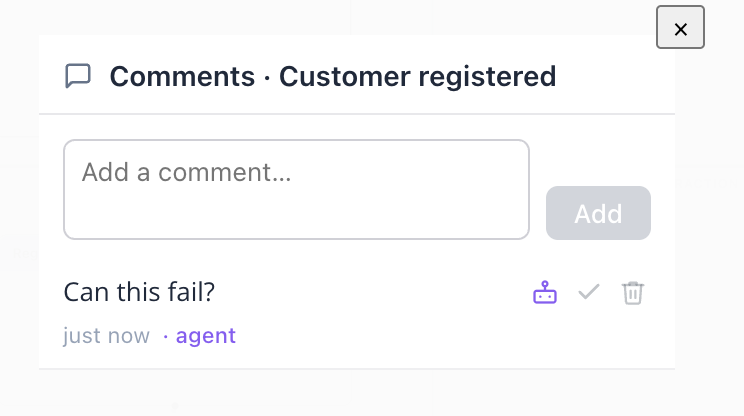
A human reviewer gets tired. They also bring assumptions. An agent trained on business knowledge brings fresh eyes to every single node, every time.
It doesn’t replace human collaboration - that’s not the goal. But it may find a gap nobody else saw.
2. Model Features in Isolation
Before anything touches the codebase, agents can take a feature and model it in isolation. The input can be as raw as you like - a written description, a ticket, a meeting transcript, or a live conversation. The agent structures it into something usable on the other end.
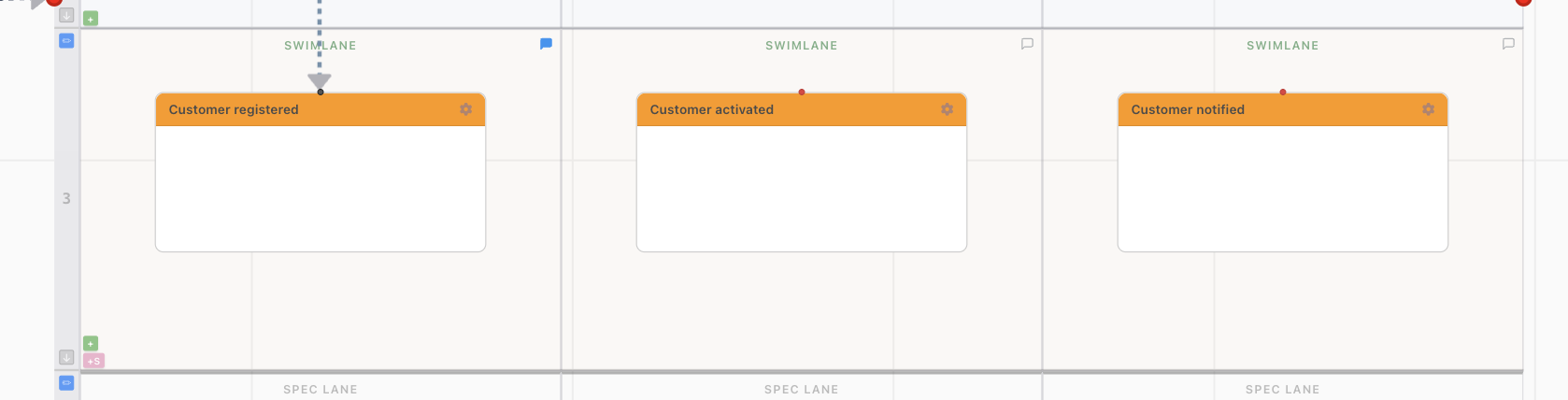
Starting with the timeline of potential events.
Generating screen mockups.

Or modeling complete features in isolation - this can be the result of a live transcript. “Model as you speak.”
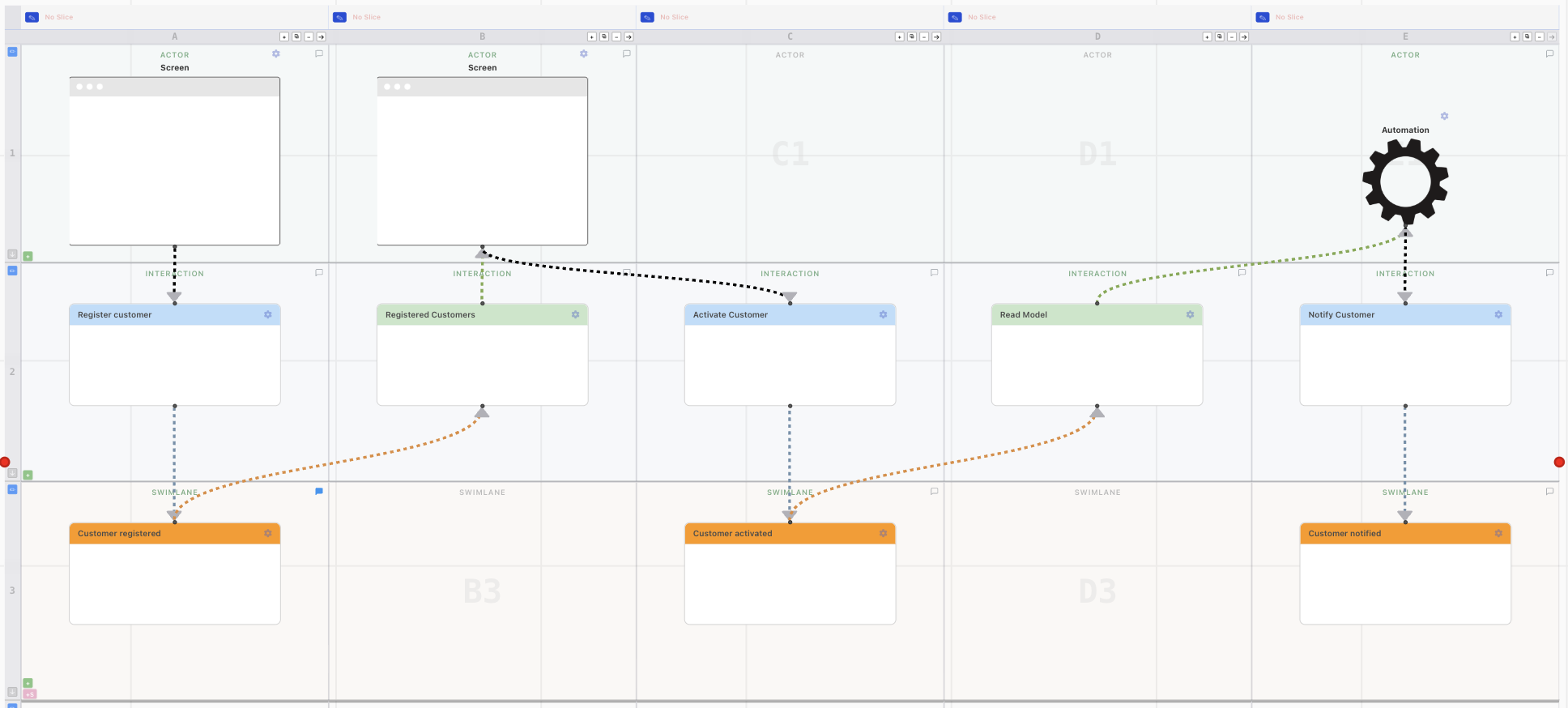
No clean input required. Just the messy, human way ideas actually arrive.
3. Generate Scenarios from Conversations
Modeling the functionality isn’t enough. Business rules matter just as much - and they live in conversations, not documents.
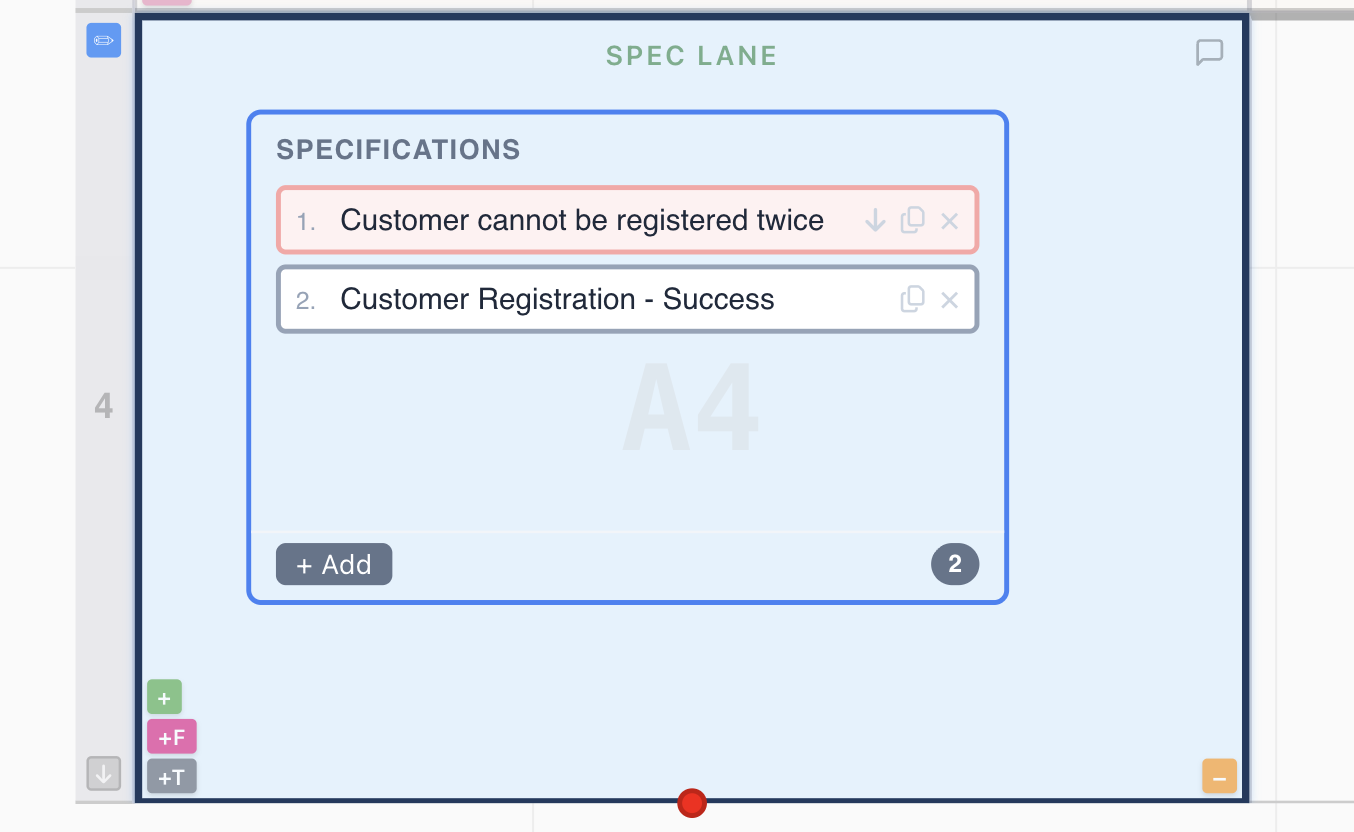
Agents can take those conversations and generate scenarios from them. But here’s what makes this step genuinely powerful: the agent doesn’t just transcribe. It adds scenarios from its own knowledge base - things it thinks should be mentioned, edge cases that commonly get missed, rules that follow logically from what was said.
It’s not a recorder. It’s a thinking partner that contributes.
4. Review Assigned Tasks and Do the Grunt Work
There’s always grunt work in the model. Adjusting screens. Adding fields. Renaming, reordering, restructuring. The kind of work that eats an engineer’s afternoon without requiring a single real decision.

Agents can be assigned those tasks and run them in the background - while the engineer focuses on the work that actually needs a human.
Engineers make the decisions. Agents do the execution. That’s a completely different relationship with the work.
5. Code Generation from the Spec
And finally - the step everyone thinks is the whole game.
By this point, the agent has access to the complete model. Not a high-level summary. Every detail. Every spec. Every defined field. Every business rule. Every scenario. All provided documentation - in a structured, well-defined format. No gaps, because the previous four steps closed as many as possible.
The code that comes out of this process is unrecognizable compared to what teams get when they skip straight to this step. It’s not a prototype. It’s not a happy-path demo. It’s production-grade output built on a foundation that was validated before a single line was written.
The code is mostly exactly what I would have written by hand - driven by fine-tuned skills and proper structure. Typing by hand simply doesn’t make sense anymore in almost all cases.
Why Most Teams Never Get Here
It’s not a knowledge problem. It’s a survival problem.
Teams don’t have time to experiment. They don’t have space to rethink. So they do what they know - they mimic existing processes, automate something here, improve something there. They optimize the old way of working instead of questioning whether that way should exist at all.
And so they stay in the last 10%.
The Big Question
Look at your entire process - from the first idea, through requirements, refinement meetings, implementation, review, demo.
Now ask yourself: what if that process didn’t exist? If you had AI from day one, how would you design it?
That’s where the leverage is. That’s where software engineering actually changes.
Somebody has to be willing to rethink it from scratch. Most teams aren’t - not because they can’t, but because nobody gave them permission to stop and ask the question.
Consider this yours.
Join the Agentic Engineer Program
Apply Spec-Driven Development Hands-On - Event Modeling, Event Sourcing, and AI Engineering with autonomous agents.
Book a Call Today
Want to talk through how Event Modeling could work for your team or project? Let’s have a quick, no-pressure conversation.